Free · text-first · no signup
The Future is Still Human.
Learn to design and ship production backend systems: AI engineering and system design.
Become the engineer who ships the hard parts: scale, storage, queues, failure, and now AI systems. Two free tracks, from first principles to production, with runnable code at every step.
~192 min live · free · no account needed
Learn a track
AI Engineering
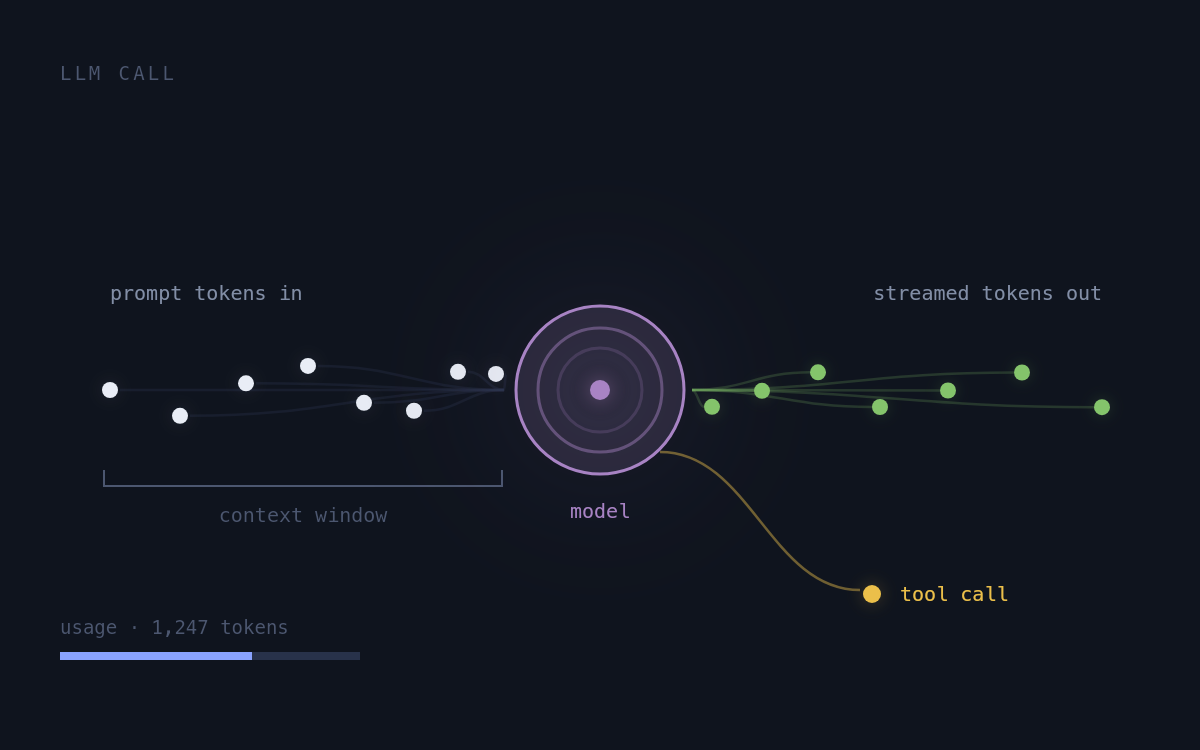
LLM APIs, structured output, RAG, agents, evals, cost and latency. Built on the backend instincts you already have.
24 lessons live · 8 modules · start free
Design a system
System Design
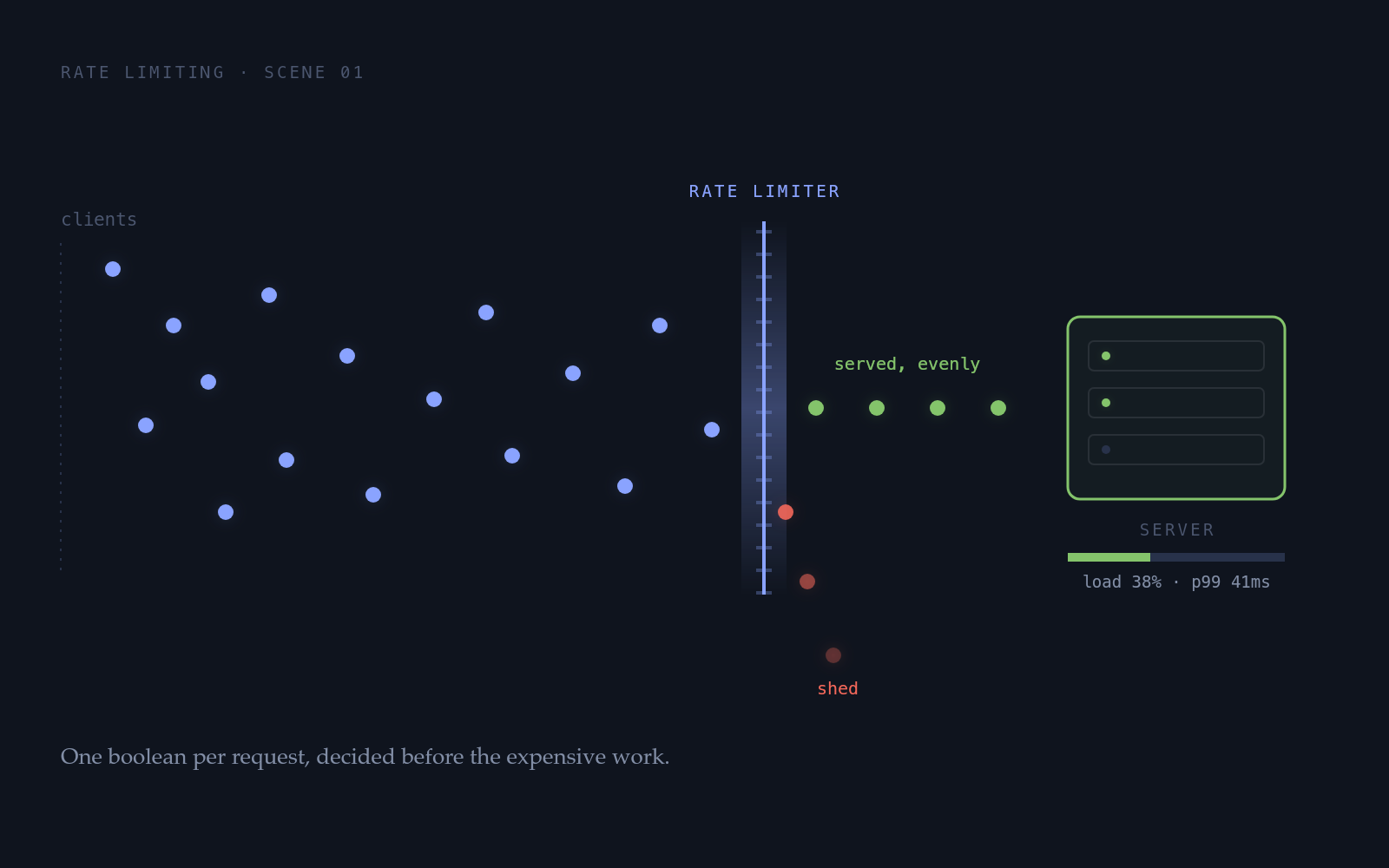
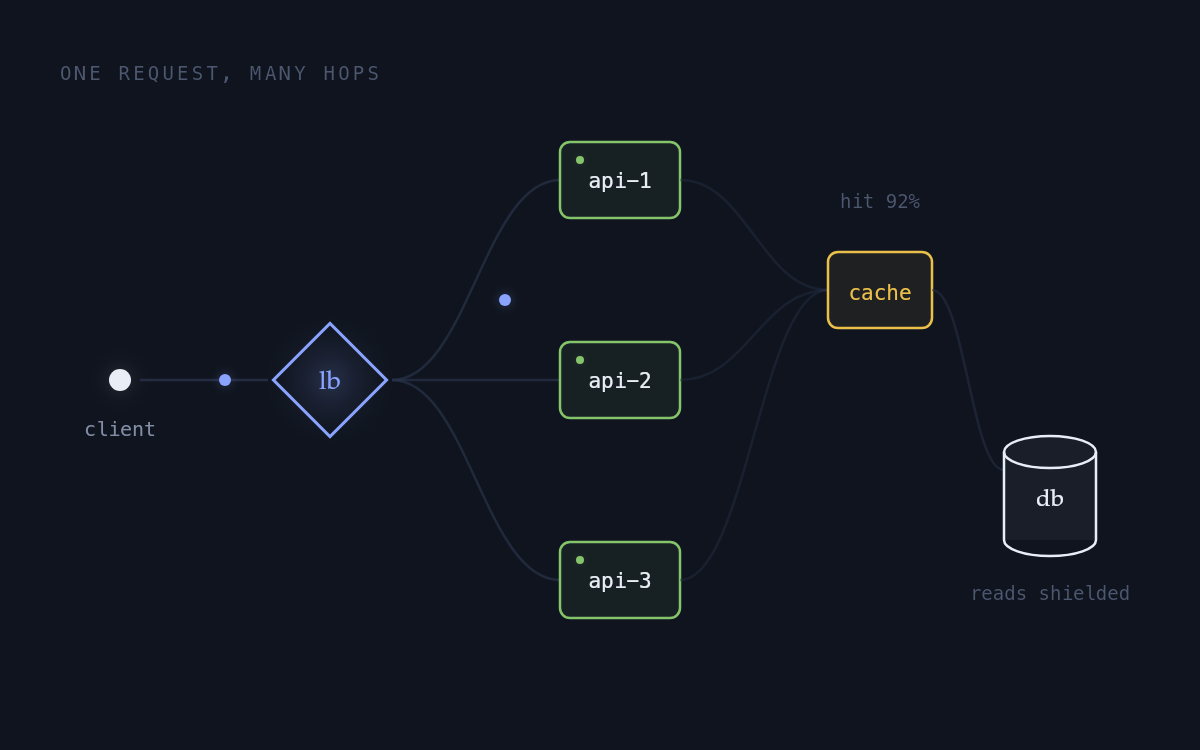
Estimation, databases at scale, caching, queues, reliability. The fundamentals that outlast any framework.
6 lessons live · 7 modules · start free
Pass an interview
Interview Prep
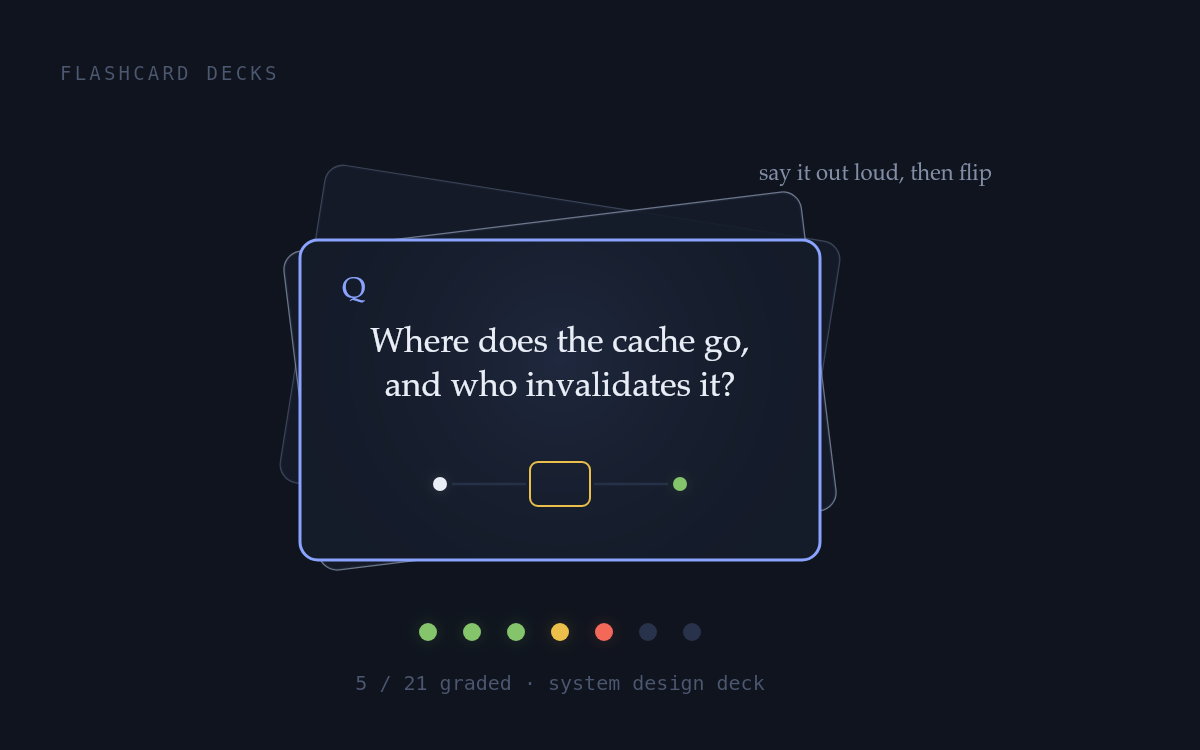
Real questions with answers you can say out loud. Read them as a list or flip them as self-graded flashcards.
3 decks · 60 questions · self-graded
Decision guides
Here with one specific question? Start with a guide.
Standalone answers to production questions: decision tables, trade-offs, runnable code. Each one reads in about 10 minutes. No curriculum required.
- Add an LLM to Your Backend: 6 Integration Patterns10 min →
- pgvector vs Pinecone vs Qdrant: Which to Use (2026)10 min →
- Hybrid Search in Postgres: pgvector + Full-Text6 min →
- Keep Embeddings in Sync With Your Database10 min →
- RAG Evaluation Metrics That Gate a Deploy10 min →
- LLM Fallbacks: Routing, Retries, and Timeouts9 min →
- LLM Prompt A/B Testing and Automatic Rollback9 min →
- How to Stream LLM Responses: SSE vs WebSockets5 min →
Interview prep
Interview coming up? Drill the decks.
Real questions with answers you can say out loud: read them as a list, or flip them as self-graded flashcards. Progress stays on this device.
- Backend Interview Questions, Answered20 questions →
- System Design Interview Questions, Answered20 questions →
- Database Interview Questions, Answered20 questions →
Start anywhere, ship real systems
System Design starts from first principles; AI Engineering builds on backend code you already ship. Either way you're building production instincts from lesson one.
Production-first, not demo-first
Anyone can ship a demo. You'll learn the other 90%: reliability, observability, evals, retries, cost and latency, the parts that put your name on the launch.
Text and code, no videos
Dense, skimmable lessons with runnable code. Read one over coffee, apply it at work the same day.
Inside a lesson
Lessons that read like good internal docs.
Start here. The rest ships weekly.
Modules 1 to 4 are live: 24 lessons, about 192 minutes of dense reading. The remaining 4 ship in order, roughly one per week. Progress saves in your browser, no account.
01 · AI Engineering
4 modules live · 24 lessons
browse the track →
02 · System Design
1 module live · 6 lessons
start estimation →
Live now
- 01LLM FoundationsA working mental model of LLMs for people who think in systems: tokens, context windows, model selection, non-determinism, and the production AI stack.6 lessons · ~47 minStart →
- 02Working with LLM APIsThe LLM API as a backend dependency: streaming, retries and timeouts, rate limits, provider abstraction, and treating model calls as a flaky upstream.6 lessons · ~45 minStart →
- 03Prompting & Structured OutputPrompts as API contracts: system prompt design, few-shot patterns, JSON schema outputs, tool definitions, and treating model output as untrusted input.6 lessons · ~52 minStart →
- 04RAG & EmbeddingsRetrieval-augmented generation end to end: embeddings, chunking strategies, vector databases vs pgvector, hybrid search, reranking, and the architecture of a production RAG service.6 lessons · ~48 minStart →
4 modules to go.
RAG, agents, evals, serving, and the capstones ship in order, roughly one per week. Get each module in your inbox the day it lands. Reading stays free either way; email is the ping, not the gate.
Shipping next
Why this exists
AI can write the code. Someone still has to ship the system: own the retries, the evals, the latency budget, the bill. This site exists to keep backend engineers in that seat.
— written by a backend engineer at a fintech, shipping LLM systems in production. Lessons come from building the real thing.
Questions, answered.
Is it really free?
Yes. Both tracks are free to read, no account, no trial, no unlock. If a paid deep-dive product ever exists, it will be separate and clearly labeled. The tracks themselves stay free.
Do I need an ML background?
No. The AI Engineering track teaches the engineering layer around models, not training them, and System Design has no ML in it at all.
Who is this for?
Anyone serious about backend systems: from shipping your first production API to adding AI to a stack you already run. System Design starts at first principles; AI Engineering builds on backend experience.
Why text instead of videos?
Text is denser, skimmable, searchable, and copy-pasteable. A 43-minute read carries more than three hours of video, and you can read it in the gaps of a workday.
How often do new lessons ship?
Roughly one module per week until the AI Engineering track's eight modules are live; the System Design track follows. The newsletter announces each one; the RSS feed carries them too.